


Was passiert im Körper, wenn eine Erektion entsteht? Die Wirkung einer kräftigen, reaktionsschnellen Erektion kennt jeder Mann, doch nur wenige verstehen das System dahinter. Und wenn die Erektionskraft sich verändert, kann das schnell verunsichern. Zu verstehen, wie eine Erektion physiologisch und emotional funktioniert, ist einer der wirksamsten Wege, Selbstvertrauen aufzubauen, die Erektionsqualität zu verbessern und den eigenen Körper mit Klarheit statt Druck wahrzunehmen.
Erektionen sind kein Zufall. Sie sind hochkoordinierte Prozesse, an denen Gehirn, Hormone, Blutgefäße, Beckenboden und – ganz wesentlich – das Sicherheitsgefühl des Nervensystems beteiligt sind. Wenn alle Teile zusammenspielen, gelingen Erektionen mühelos. Gerät ein Teil unter Druck, kann das gesamte Erleben unvorhersehbar werden.
Die gute Nachricht: Jeder Abschnitt des Erektionsprozesses ist trainierbar. Und je besser die Abfolge verstanden wird, desto gezielter lässt sie sich unterstützen.
Teilen wir den Ablauf in acht klare Schritte auf.
Schritt 1. Das Gehirnsignal: Erregung beginnt, bevor der Körper reagiert
Jede Erektion beginnt lange bevor Blut in den Penis fließt. Auslöser ist ein Signal im Gehirn – ein Moment von Interesse, Lust oder Neugier. Vielleicht ist es ein Gefühl, ein Gedanke, ein Blick, ein Geräusch oder einfach die Energie der Nähe zu einer Person. Dieser mentale Funke aktiviert Nervenbahnen, die den Körper in Richtung Erregung ausrichten.
Dopamin, der Neurotransmitter für Verlangen und Fokus, schärft die Aufmerksamkeit und steigert die Empfindsamkeit. Aber Dopamin allein genügt nicht. Das Gehirn muss dem Körper signalisieren, dass es Zeit ist, zu öffnen – nicht sich zu verspannen. Dieses Signal wandert über das Rückenmark in das Becken und bereitet den Körper auf die nächste Phase der Erektion vor.
Deshalb ist mentale Erregung so wirkungsvoll – und mentaler Stress oder Ablenkung können den Prozess schon vor dem Start unterbrechen. Der Erektionsmechanismus braucht Klarheit und Präsenz, nicht Leistungsdruck.
Schritt 2. Der Wechsel im Nervensystem: Von Druck zu Sicherheit
Sobald das Erregungssignal aktiviert ist, muss das Nervensystem einen entscheidenden Wechsel vollziehen. Erektionen entstehen nur, wenn das parasympathische Nervensystem (der Modus „ruhen, entspannen und öffnen“) die Führung übernimmt.
Stress, Druck oder Angst aktivieren den Sympathikus, die „Kampf-oder-Flucht“-Reaktion. Blut wird in die Gliedmaßen umgeleitet, die Atmung wird flacher, Adrenalin steigt – der Körper bereitet sich auf Verteidigung vor, nicht auf Sexualität. Schon leichte Anspannung oder Selbstkritik kann die Kaskade unterbrechen.
Chronischer Stress erhöht Cortisol, dämpft Testosteron, verengt Blutgefäße und stört Stickstoffmonoxid, das Molekül, das die Penisschlagadern entspannt. Deshalb ist Stress einer der häufigsten Auslöser für Erektionsschwierigkeiten. Der Körper schützt – er versagt nicht.
Fühlt sich das Nervensystem sicher, öffnet sich der Körper. Der Blutfluss vertieft sich. Die Empfindung nimmt zu. Erregung wird wieder zugänglich.
Schritt 3. Freisetzung von Stickstoffmonoxid: Das chemische Signal, das den Körper öffnet
Ist das Nervensystem in einem offenen, aufnahmebereiten Zustand, setzt der Körper aus Nervenendigungen und Endothelzellen Stickstoffmonoxid (NO) frei. Das ist der chemische Auslöser, der die physische Erektion startet.
Stickstoffmonoxid entspannt die glatte Muskulatur der Penisschlagadern, sodass sie sich weiten. Diese Weitung – Vasodilatation – ist essenziell. Ohne sie kann kein Blut in die Schwellkörper fließen.
Testosteron spielt hier eine unterstützende Rolle. Es verstärkt die NO-Bildung, stärkt die sexuelle Signalgebung im Gehirn und erhöht die Reaktionsbereitschaft. Sinkt Testosteron, geht die NO-Produktion zurück, das Verlangen nimmt ab, und der Körper muss stärker arbeiten, um Festigkeit zu erreichen und zu halten.
NO auf natürliche Weise zu fördern – durch Bewegung, Sonnenlicht, tiefes Atmen und nitratreiche Lebensmittel – schafft die Basis für stärkere, verlässlichere Erektionen.
Schritt 4. Arterielle Weitung & Blutfluss: Das Fundament der Erektionskraft
Sobald NO die Gefäße öffnet, wird der Blutfluss zum eigentlichen Motor der Erektion.
Blut strömt in die Penisschlagadern und füllt die Corpora cavernosa, die beiden länglichen Kammern, die sich zur Festigkeit ausdehnen. Je gesünder das Herz-Kreislauf-System, desto leichter gelingt diese Phase.
Durchblutung ist das Rückgrat der Erektionskraft. Ist der Blutfluss stark, fühlen sich Erektionen voller, härter und reaktionsschneller an. Ist er eingeschränkt, wirken Erektionen weicher oder lassen schneller nach – auch wenn das Verlangen hoch ist.
Deshalb sind Veränderungen der Erektionsqualität oft frühe Hinweise auf Verschiebungen der Gefäßgesundheit. Penisschlagadern sind kleiner und empfindlicher als die im Herzen, daher zeigen sich Durchblutungsprobleme häufig zuerst an der Erektion.
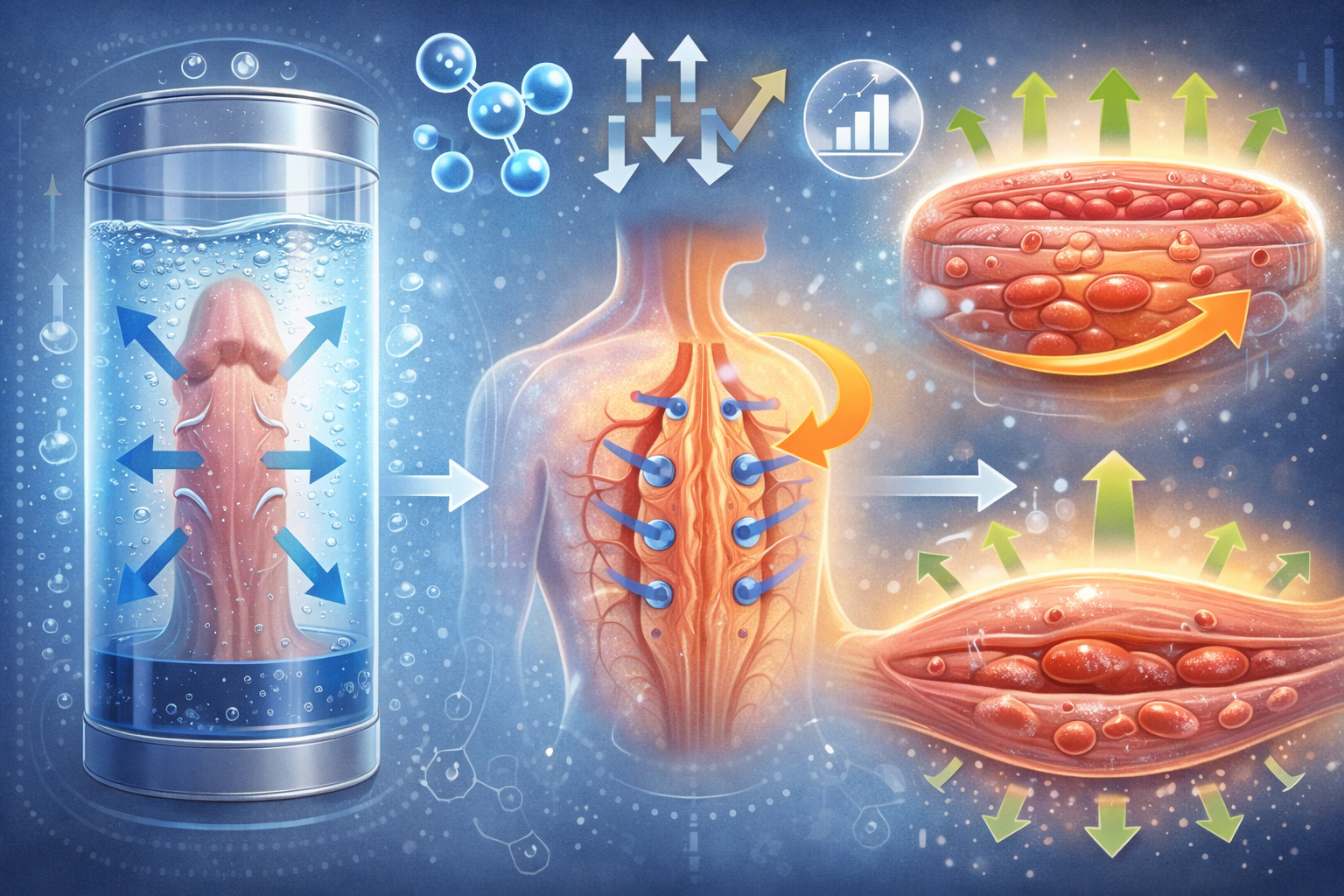
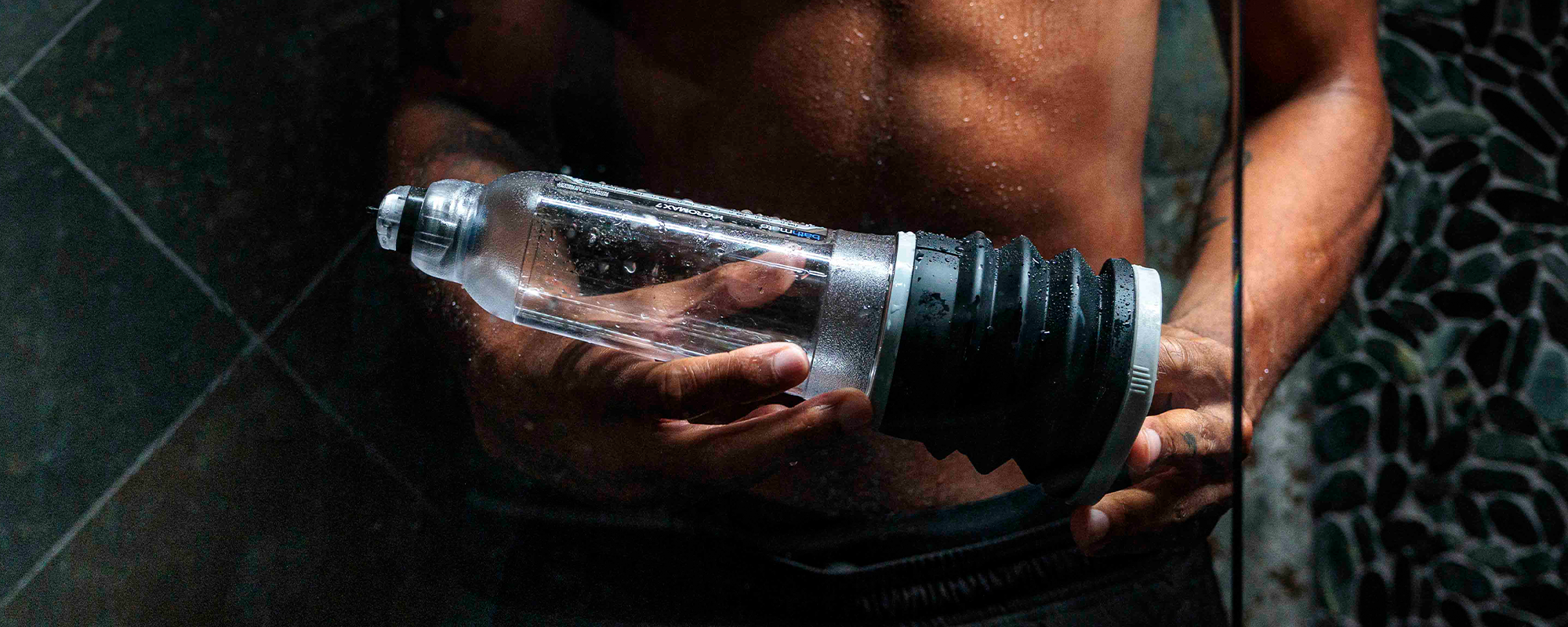
Werkzeuge, die die Durchblutung unterstützen – zum Beispiel Bewegung, warmes Wasser, Atemarbeit und Training mit der Hydropumpe – können diese Phase direkt verbessern. Die Verwendung einer Hydropumpe wie Bathmate in warmem Wasser erhöht das Blutvolumen im erektilen Gewebe, verbessert die Elastizität des Endothels und hilft, die Gefäße wieder leichteres Öffnen zu „erlernen“. Deshalb kann konsequente Hydropumpen-Anwendung als Teil der täglichen Routine die Gewebegesundheit unterstützen.
Schritt 5. Strukturelle Ausdehnung: Wie sich erektiles Gewebe physisch füllt
In den Corpora cavernosa, den beiden Kammern des Penis, die sich mit Blut füllen, verhält sich das erektile Gewebe wie ein Schwamm. Sobald Blut einströmt, dehnt sich das Gewebe in alle Richtungen aus. Diese Ausdehnung erzeugt einen inneren Druck, der die sichtbare Festigkeit bewirkt.
Diese Phase hängt stark von der Elastizität und Oxygenierung des erektilen Gewebes ab. Nächtliche Erektionen (die spontanen Erektionen während der REM-Schlafphasen) spielen eine entscheidende Rolle, um das Gewebe mit Sauerstoff zu versorgen und seine Reaktionsfähigkeit zu erhalten. Wenn diese natürlichen Erektionen durch Stress, hormonelle Veränderungen oder nach Operationen seltener werden, kann das Gewebe weniger elastisch werden und sich der Ausdehnung stärker widersetzen.
Eine Hydropumpen-Session hilft, diese natürliche Sauerstoffversorgung nachzuahmen, indem sie frisches, sauerstoffreiches Blut in die Kammern zieht. Mit der Zeit kann das eine gesündere Gewebeausdehnung und mehr Erektionsfülle im Alltag unterstützen.
Schritt 6. Beckenboden-Aktivierung: Das Muskelsystem, das die Erektion hält
Wenn sich das erektile Gewebe mit Blut füllt, übernimmt der Beckenboden. Insbesondere die Muskeln Bulbospongiosus (BC) und Ischiocavernosus (IC) wirken als natürliche Stabilisatoren der Erektion. Sie komprimieren die Peniswurzel, halten das Blut in den Schwellkörpern und erhalten den Druck.
Wenn diese Muskeln stark und koordiniert sind, unterstützen sie:
- Einen höheren Erektionswinkel
- Größere Festigkeit
- Mehr Ausdauer
- Kontrolliertere Ejakulation
- Optisch größer wirkend durch vollere Füllung
Sind sie schwach, entweicht Blut zu schnell, und Erektionen verlieren früher als nötig an Härte.
Ein 12-wöchiges Beckenbodentraining konnte die Erektionshärte und die sexuelle Kontrolle deutlich verbessern – ein Beleg dafür, wie essenziell diese Muskulatur für die allgemeine Erektionsgesundheit ist.
Kraft ist wichtig, aber Entspannung ebenso. Ein dauerhaft verspannter Beckenboden kann den Blutfluss genauso beeinträchtigen wie ein schwacher. Ausgewogenes Training fördert Stärke, Kontrolle und Fluss.
Schritt 7. Hormonelle Unterstützung: Testosteron als Verstärker, nicht als Auslöser
Testosteron verursacht Erektionen nicht direkt. Es verstärkt jedoch alles, was Erektionen stark macht.
Gesunde Testosteronspiegel unterstützen:
- Die Bildung von Stickstoffmonoxid
- Libido und sexuelle Aufmerksamkeit
- Stimmung und Motivation
- Gefäßfunktion
- Energie und Regeneration
- Morgendliche Erektionen
Schon moderate Rückgänge beim Testosteron zeigen sich schnell in der Erektionsqualität. Häufig fallen seltener werdende morgendliche Erektionen, geringeres Verlangen oder eine langsamere Reaktionsbereitschaft früher auf als Veränderungen bei Training oder Energie.
Lebensstilfaktoren wie Bewegung, Schlaf, Krafttraining und weniger Stress können die natürlichen Testosteronspiegel deutlich unterstützen. Und Testosteron stärkt den Erektionsmechanismus über dieselben Gefäßwege, die Durchblutung und Sauerstoffversorgung regulieren.
Wenn Hormone und Blutfluss zusammenwirken, verbessert sich die Erektionskraft auf natürliche Weise.
Schritt 8. Die Rückkopplungsschleife: Selbstvertrauen, Erregung und Durchblutung im Zusammenspiel
Einer der am häufigsten übersehenen Aspekte der Erektionsgesundheit ist die Rückkopplungsschleife zwischen Selbstvertrauen, Nervensystemsicherheit und Durchblutung.
- Wenn man dem eigenen Körper vertraut (seiner Reaktionsfähigkeit), entspannt sich das Nervensystem. Die parasympathische Aktivierung vertieft sich. Blutgefäße weiten sich leichter. Erregung kommt natürlicher.
- Steigt das Selbstvertrauen, verbessert sich der Blutfluss – und verbessert sich der Blutfluss, vertiefen sich Erektionen.
- Werden Erektionen tiefer, steigt das Selbstvertrauen weiter.
Das ist die Schleife, die sexuelle Vitalität wiederherstellt.
Bathmate fügt sich in diese Schleife ein, indem jede Anwendung eine beständige, spürbare Rückmeldung gibt, dass der Körper reagieren kann. Jede Session stärkt die Verbindung zwischen Erregung, Selbstvertrauen und Durchblutung.
Alles zusammenbringen
Eine Erektion ist nicht eine einzige Sache. Sie ist ein System – eine koordinierte Abfolge aus Signalen, Chemie, Blutfluss, muskulärer Aktivierung und emotionaler Präsenz. Wenn auch nur ein Teil dieses Systems unter Druck steht, gedämpft ist oder erschöpft, kann sich die Erektionskraft verändern. Diese Veränderung ist kein Versagen, sondern Information.
Das Verständnis der einzelnen Schritte verwandelt Angst in Klarheit und Verwirrung in Selbstwirksamkeit. Erregung braucht Sicherheit, Ausdehnung braucht Durchblutung, Fülle braucht Sauerstoffversorgung, und Ausdauer braucht muskuläre Unterstützung. All diese Systeme lassen sich mit Beständigkeit trainieren, stärken und unterstützen.
Bewegung, Schlaf, Atmung, Beckenbodenkraft, emotionale Präsenz und tägliche Maßnahmen für die Durchblutung – etwa die Hydropumpe im warmen Wasser – schaffen einen Körper, der sich offen, reaktionsbereit und selbstsicher anfühlt.
Die Erektion ist nicht von der restlichen Gesundheit getrennt – sie spiegelt sie wider. Wer den Körper durch diese acht Stufen unterstützt, trainiert nicht nur Erektionen, sondern baut auch mehr Vitalität, stabileres Selbstvertrauen und eine stärkere, geerdete Beziehung zur eigenen Sexualität auf.




Hakima Tantrika
Learn MoreHakima Tantrika is a sex educator, intimacy coach, and copywriter who contributes regularly to Bathmate’s blog. Trained in classical Tantra, she helps individuals cultivate deeper self-awareness, authentic connection, and embodied confidence. On Substack, she leads an engaged community where she shares insights on sexuality, relationships, and personal growth, blending education with honest storytelling. Through her clear, thoughtful approach and distinctive voice, Hakima brings depth and integrity to modern conversations about intimacy, pleasure, and self-understanding.
Share:
Bartwuchs und sexuelle Wahrnehmung: Was Studien sagen},{
Sexuelle Aftercare: Was sie ist und warum sie wichtig ist